
History
The history of Datwyler
At the Datwyler Group, we look back on more than 100 years of successful company history. In 1915, only Adolf Datwyler believed in the potential of the wire and rubber plant in the Swiss mountain canton of Uri.
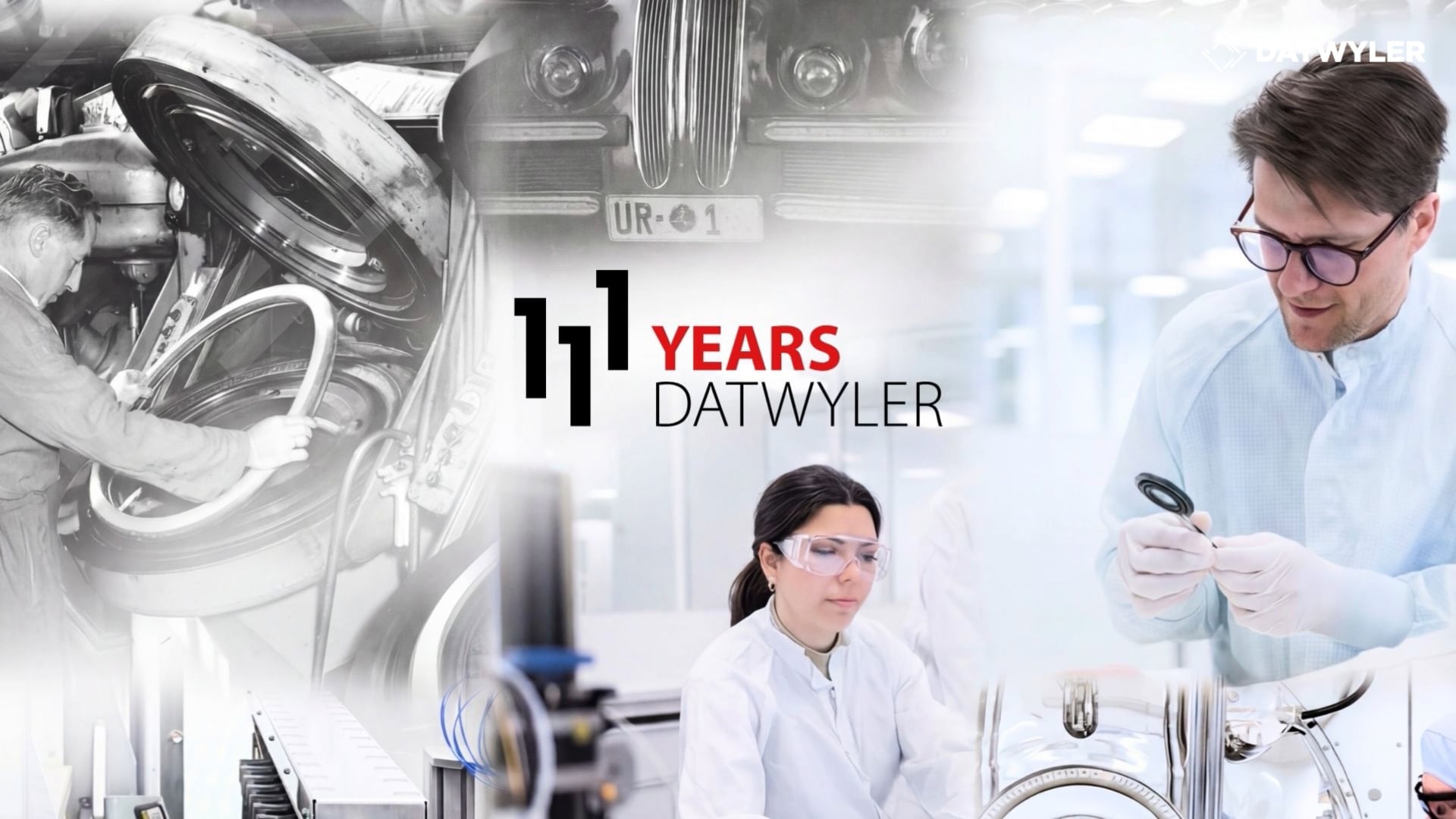
Anniversary
111 Years Datwyler
It took courage and pioneering spirit to create the basis for an entrepreneurial success story. His sons Peter and Max Datwyler continued to very skillfully lead the growing company as of 1958 and expanded abroad. Today, the Datwyler Group is a global industrial supplier, which is still headquartered right in the Swiss Alps but now employs more than 7’500 people worldwide.
Milestones
The only person to believe in the potential of a heavily indebted wire and rubber factory in the Canton of Uri on the northern side of the Swiss alps was Adolf Datwyler. With courage and pioneering spirit, he created the basis for an entrepreneurial success story. The following milestones are worth a mention.
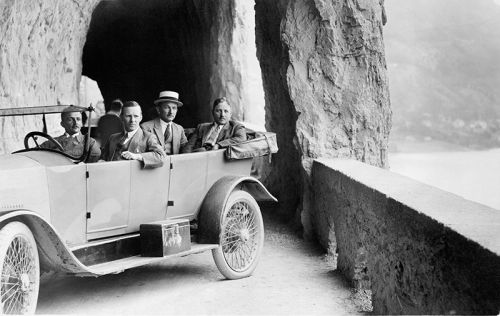
Adolf Datwyler was appointed to manage Schweizerische Draht- und Gummiwerke, a financially troubled Swiss wire and rubber company and the forerunner of the present Datwyler Group based in Altdorf/Uri.
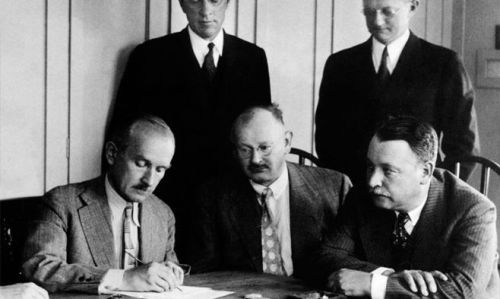
The first step to build the Group came with a factory set up in Pratteln to manufacture Firestone products. After many successful years, the controlling interest was sold to the licensor, Firestone USA (1973).
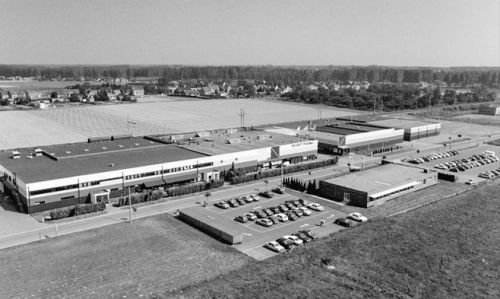
Datwyler embarked on selective international expansion with the aim of earning a reputation for niche market products.
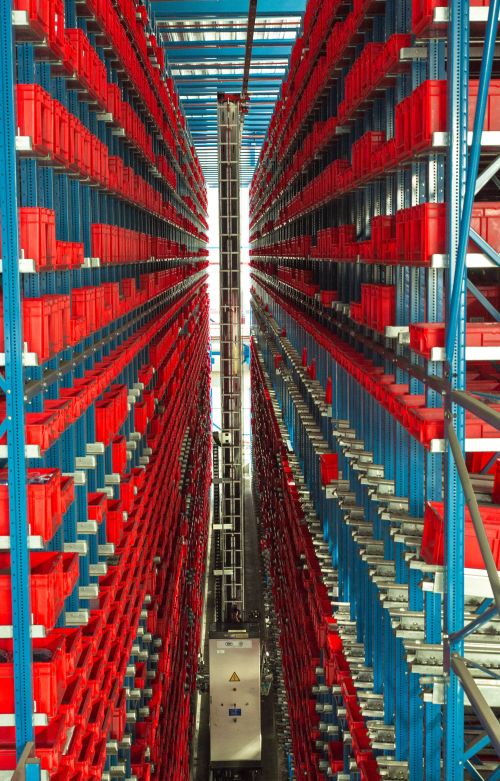
The Technical Components Division started its systematic expansion and internationalisation to build the Daetwyler Teco distribution organisation.
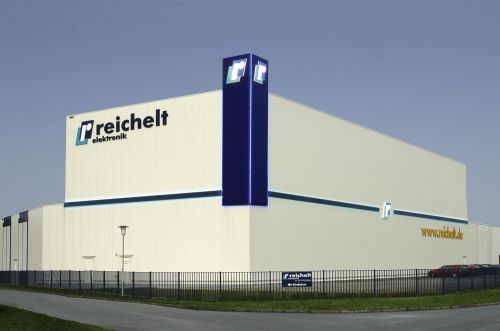
Acquisition of the German Reichelt Elektronik and further expansion of the online/catalogue distribution of industrial electronics and automation.
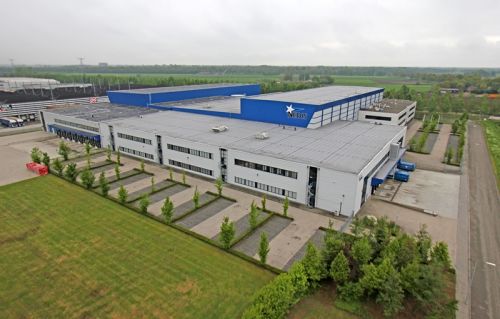
Acquisition of the Dutch Nedis Group to further strengthen the online/catalogue distribution. Acquisition of the Chinese Zhongding and the Korean Hankook to strategically expand the automotive business in the Sealing Technologies division. Sale of the Cabling Solutions division to the majority shareholder Pema Holding Inc. and consolidation of the Pharma Packaging and the Sealing Technologies divisions to form the Sealing Solutions division.
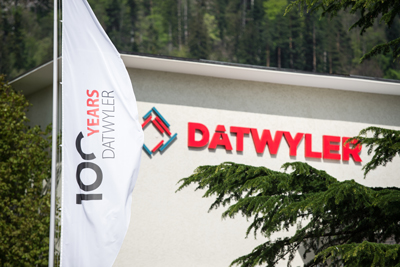
Datwyler Group is celebrating its 100 years anniversary.
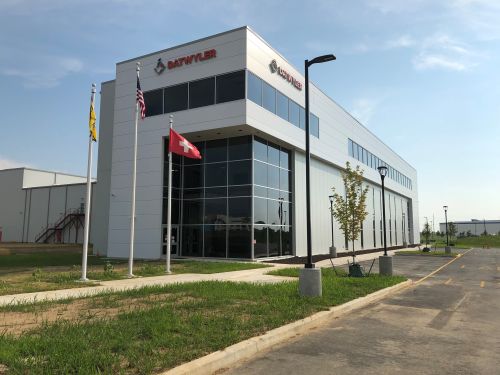
Opening of a new health care plant in the USA. Acquisition of Parco in the USA and Bins in Brazil in the Sealing Solutions division. Parco strengthens the O-ring business and Bins improves the access to South America.
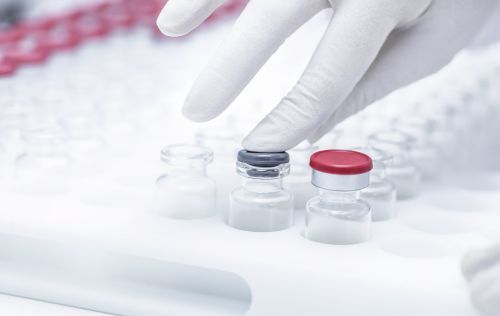
Support the fight against the pandemic by delivering components to the leading suppliers of COVID-19 vaccines.
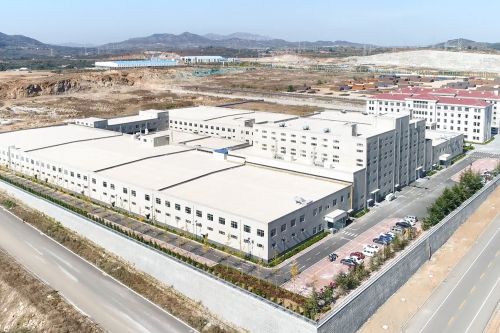
Acquisition of Yantai Xinhui Packing opens up direct access to the Chinese health care market.
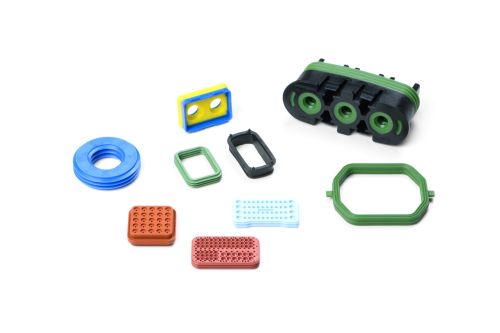
Acquisition of QSR makes Datwyler the world market leader for components for electrical connectors.
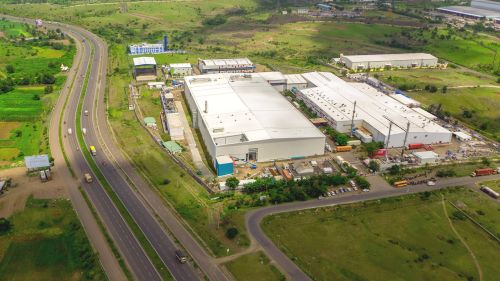
Second plant at the Indian site further expands the healthcare production capacity.
Datwyler Group is celebrating its 111 years anniversary.
First success
Daring start paid a handsome dividend.
In 1915, Adolf Datwyler, a young farmer’s son, was the only person to believe in the potential of highly indebted Schweizerische Draht- und Gummiwerke, a cable and rubber factory located in Altdorf in Canton Uri. The company was founded in 1902 in Zurich by five German businessmen with doubtful reputations. In 1909 the company headquarters relocated to Altdorf.
Altdorf is where Adolf Datwyler took on executive management of the small company. Datwyler had industry experience and was infinitely competent. He reorganized the ailing company and, in the midst of World War I, laid down the foundation for its far-reaching business success.
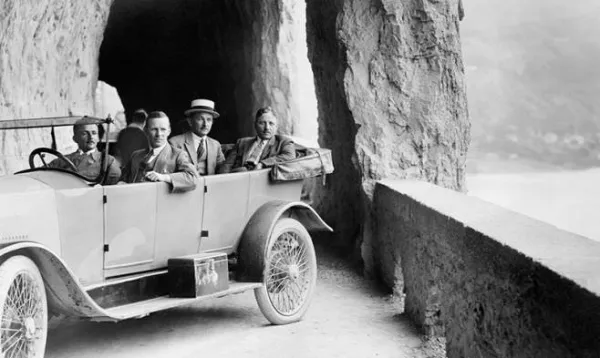
Soon, the company reported positive financial results and gratifying earnings. In June 1917, Datwyler acquired the company with the help of a group of investors for the amount of 2.25 million Swiss francs in cash, a bold step that was soon to pay handsome dividends.
In 1920, the Datwyler family acquired majority shareholding and, in 1946, the company’s name was changed to Datwyler AG.
Humanitarian values
Social responsibility beyond
company boundaries.
The situation in Canton Uri in the early 20th century was poor, especially with respect to education and a living wage. Now, the developing industrial sector opened up new opportunities.
Adolf Datwyler soon recognized this as a way to support local staff and tie them to the company. As early as 1918 he established a company health insurance fund and from 1933 onward he constructed numerous affordable housing units. Starting in 1944, the company-owned training college offered interesting continuing education programs. In 1948 Datwyler AG created a pension fund – some 30 years before it became statutory in Switzerland.
Adolf Datwyler and his wife, Selina Datwyler, took on social responsibilities beyond the everyday needs in the factory. Thanks to their contribution, the water and sewage system, an indoor swimming pool and tennis courts served the general public.
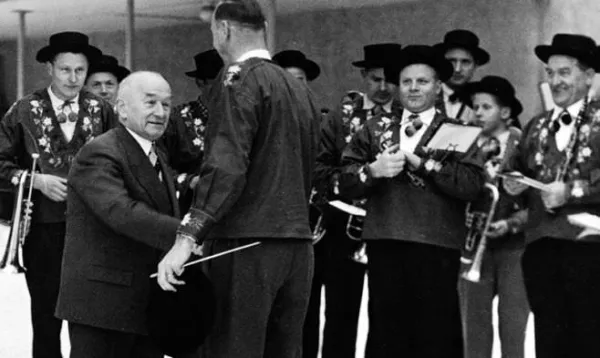
In 1965 the charitable Adolf and Selina Datwyler-Gamma Foundation was established and subsequently integrated into the Datwyler Foundation.
Acquisitions
Taking advantage of market opportunities.
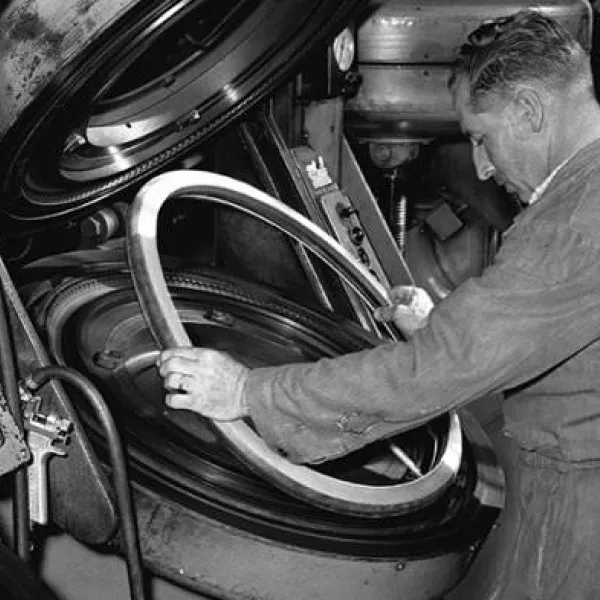
As a passionate driver of automobiles, the young automotive industry aroused Adolph Datwyler’s interest. In 1935, despite a sense of general economic crisis, he signed a licensing agreement with Firestone, the American tire manufacturer. Much to the displeasure of the competition, he opened a factory dedicated to the production of automobile tires in Pratteln near Basel.
For almost 40 years, the Pratteln factory successfully contributed to the Datwyler organization’s financial results before it was sold to the U.S. parent company at a profit. And for many years it had served as a source of qualified staff for Datwyler’s main production facility in Altdorf.
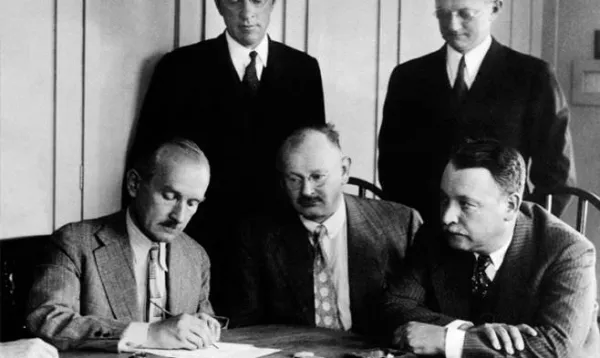
For Datwyler, Firestone sparked growth through acquisitions in related industries. In 1947, for instance, Adolph Datwyler acquired a shareholding in Stahlrohr AG Rothrist, a manufacturer of steel pipes for running electric cables. Gummi Maag was acquired two years later; it represents the kick-off for the distribution of technical components.
Innovative thinking
Recognizing the signs of the times.
World War II brought about dramatic raw-material shortages. However, Datwyler made arrangements to sidestep the scarcity of crude rubber, and by 1940 Switzerland’s largest regeneration plant for waste rubber was running at full speed in Altdorf.
At the same time, the Altdorf rubber factory began production of bicycle tires, which were a big hit under the Bullcord brand name.
Other innovative products introduced during and after the war years testify to how well Datwyler recognized the signs of the times and launched successful products despite adverse conditions. In 1945, the Cable Division developed the world’s first plastic-insulated high-voltage cable, while newly developed flooring made of plastocork included advanced polymer technology.
Datwyler in flux
The company reinvented itself.
Both Adolph Datwyler’s sons joined the company in the mid-1950s. After graduating from university, Peter and Max embarked on in-house training at the Altdorf and Pratteln sites and with Firestone in the USA.
When the company founder’s energy began to wane, his two sons advised him to establish a holding company, which was established shortly before his demise in the fall of 1958. Subsequently, Peter and Max Datwyler managed the company initiating a widely based management culture.
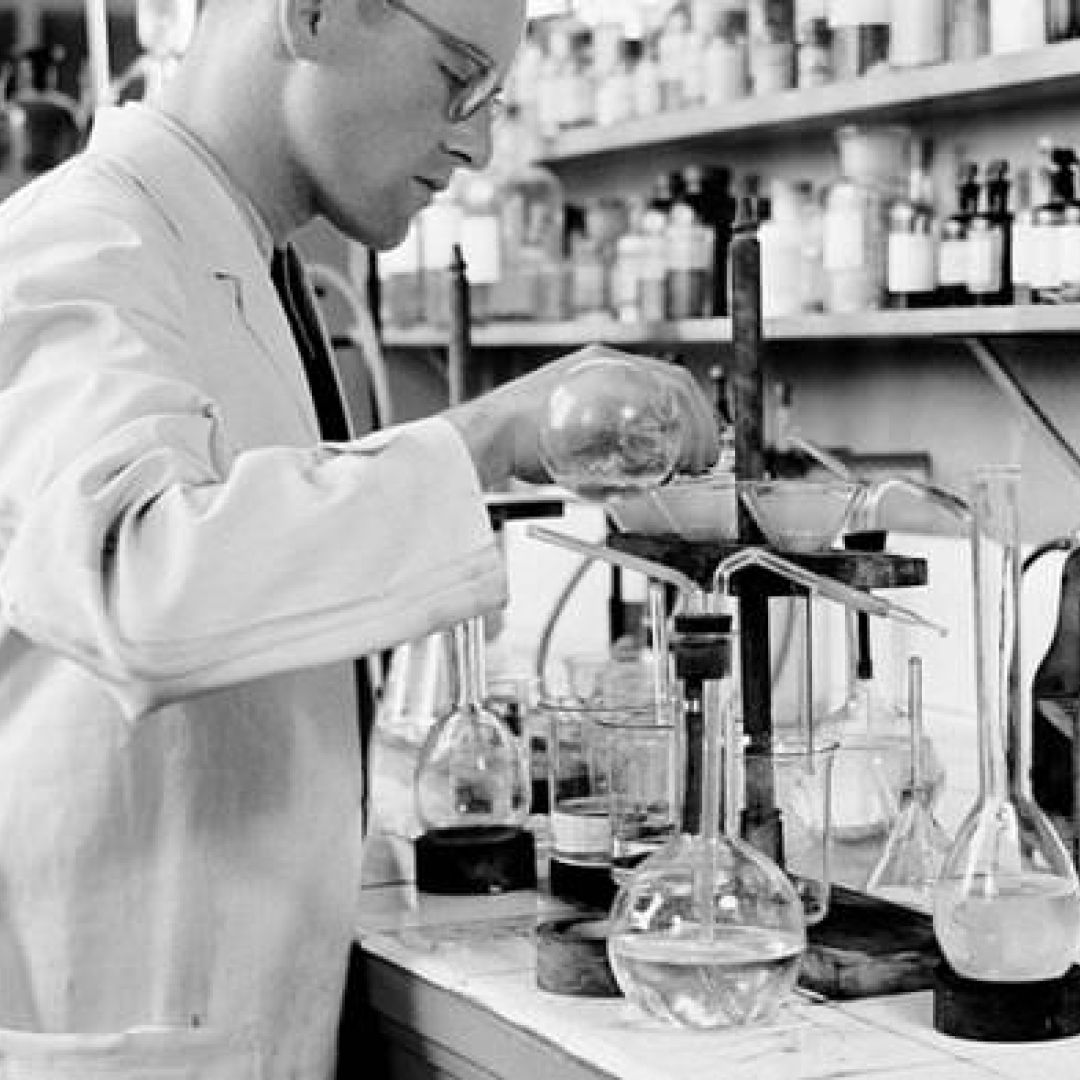
As a result, far-reaching freedom of scientific research prevailed in the company. Well beyond its 50th anniversary, the company prospered and continued to undergo change. In 1967, the three divisions – cable, rubber and flooring – began operation as independent units. This early organization by divisions caused quite a sensation in Switzerland, smoothing the way for bolder steps abroad.
Success dwells in niches
From the heart of Switzerland
to the whole world.
In the 1970s it became increasingly clear that simple, mass-produced goods would lose their market appeal in the long term. Only products that could not be easily manufactured held a promise for success in the future. Datwyler enjoyed wide know-how especially in such areas as sealing and elastomer technology, where the company successfully identified and found market niches.
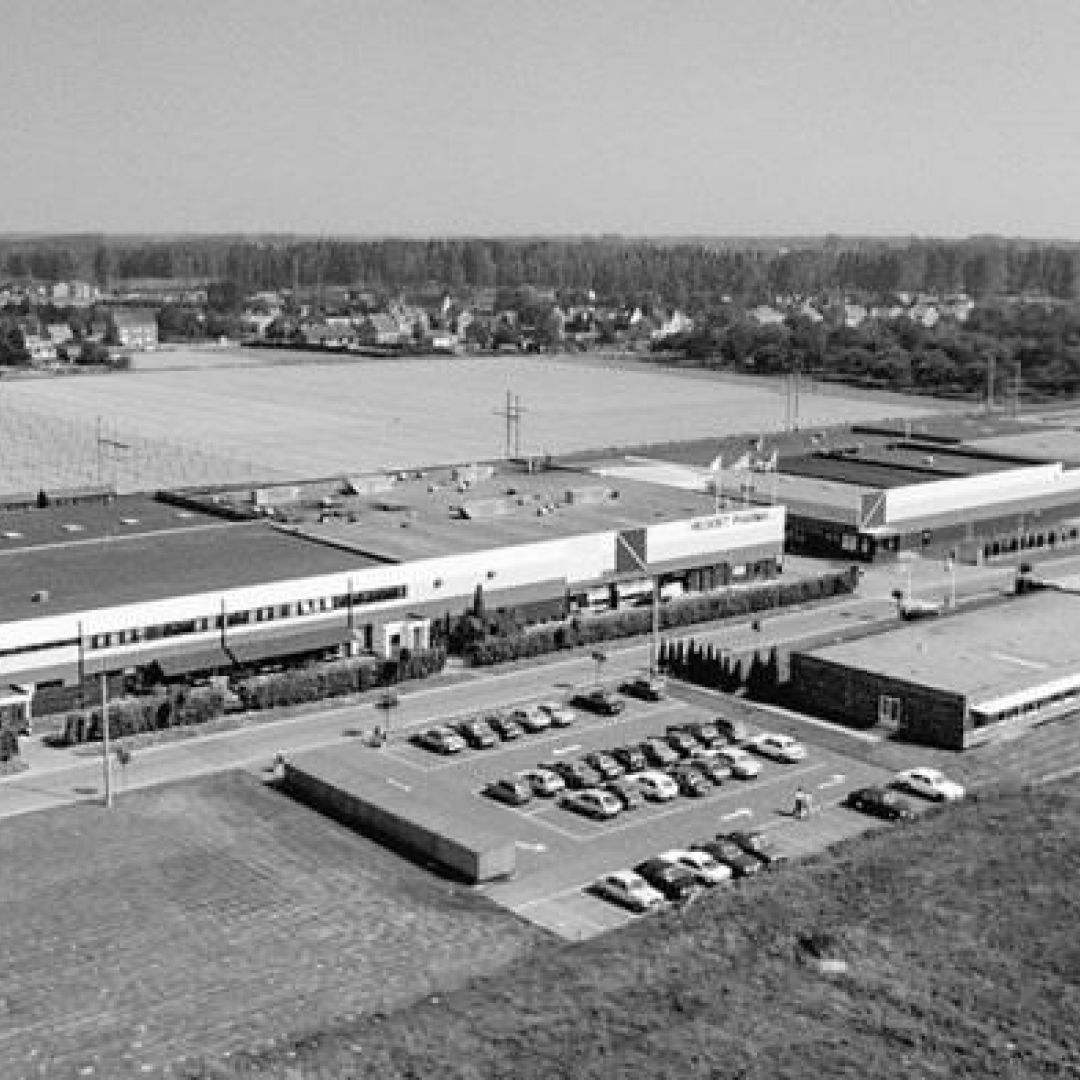
In 1975, Datwyler established the Helvoet Pharma subsidiary in Belgium, which specializes in closures for liquid drugs. In addition to the pharmaceutical industry, the automotive industry provided interesting niches for Datwyler’s high-quality components. While the Cable Division started production of fiber-optic cables in 1985, the acquisition of Distrelec AG kick-started Datwyler’s Europe-wide distribution of electronic components. Datwyler thereby laid the foundation for growth as a multi-niche player.
Securing independence
Datwyler’s viable property construct.
Peter and Max Datwyler took one half of the Datwyler Group public in 1986 with the aim of securing and stabilizing the group in the long term and achieving higher liquidity. The public offering was successful and yielded considerable additional funds.
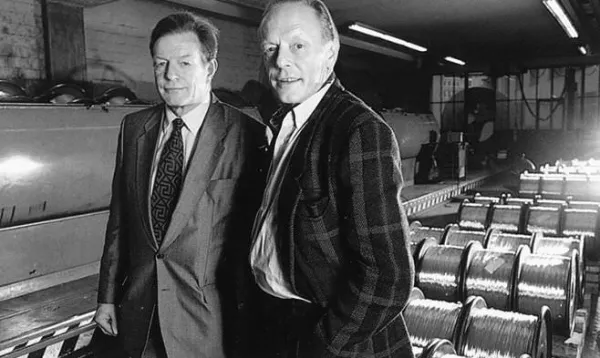
At the same time, the two brothers developed a unique succession plan in terms of which Datwyler AG’s Board of Directors controls the majority shareholding on a fiduciary basis. The Datwyler Foundation was established at the same time, and today it is one of Switzerland’s leading funding organizations with a focus on Canton Uri.
By means of this succession plan, Peter and Max Datwyler relinquished a significant share of their stake in the company in favor of creating a stable ownership structure.
GLOBALISATION
Keeping pace with change.
Toward the end of the 20th century, globalization began to accelerate vigorously and large customers began to increasingly focus on suppliers with reliable global supply capabilities.
Datwyler accepted the challenge and embarked on a global future. In 1998 the Cable Division expanded into China. Only a short time later, the Sealing Solutions Division constructed and acquired its own production facilities in the USA, Eastern Europe and Asia.
Datwyler’s global expansion boosted its competitiveness while securing the existence of its main production facilities in Canton Uri. Increasingly, new and existing customers considered Datwyler an esteemed development partner and solution provider. Datwyler arrived in the new millennium – as a global player.
Built on heritage. Driven by the future.
For more than a century, Datwyler has continuously evolved alongside changing technologies, industries and customer needs. What began with an entrepreneurial vision in 1915 has grown into a global company, shaped by a constant drive to explore new possibilities and turn technological change into opportunity.
Today, this pioneering spirit lives on. Our teams are exploring new materials and technologies with the potential to shape future applications in healthcare, industries, food & beverage, automotive and beyond. From dry electrodes to electroactive polymers and magnetically active polymers, we continue to build on more than a century of expertise while developing solutions for tomorrow.