
Wearable-Sensoren
Bringen Sie Ihre
Wearable-Anwendung
auf das nächste Level
mit SoftPulse®
Weiche Trockenelektroden ermöglichen eine einfache, komfortable und langfristige
Erfassung von Biosignalen wie EEG, ECG, EMG und EOG – sowohl für
Consumer- als auch für medizinische Anwendungen. Dank der niedrigen
Impedanz und der trockenen Anwendung eignen sich SoftPulse® optimal
für den Einsatz am Kopf, am Körper und im Ohr.

EEG
Hirnsignale

EKG
Herzaktivität

EMG
Skelettmuskeln

EOG
Augenbewegung



 Minneapolis, MN, USA


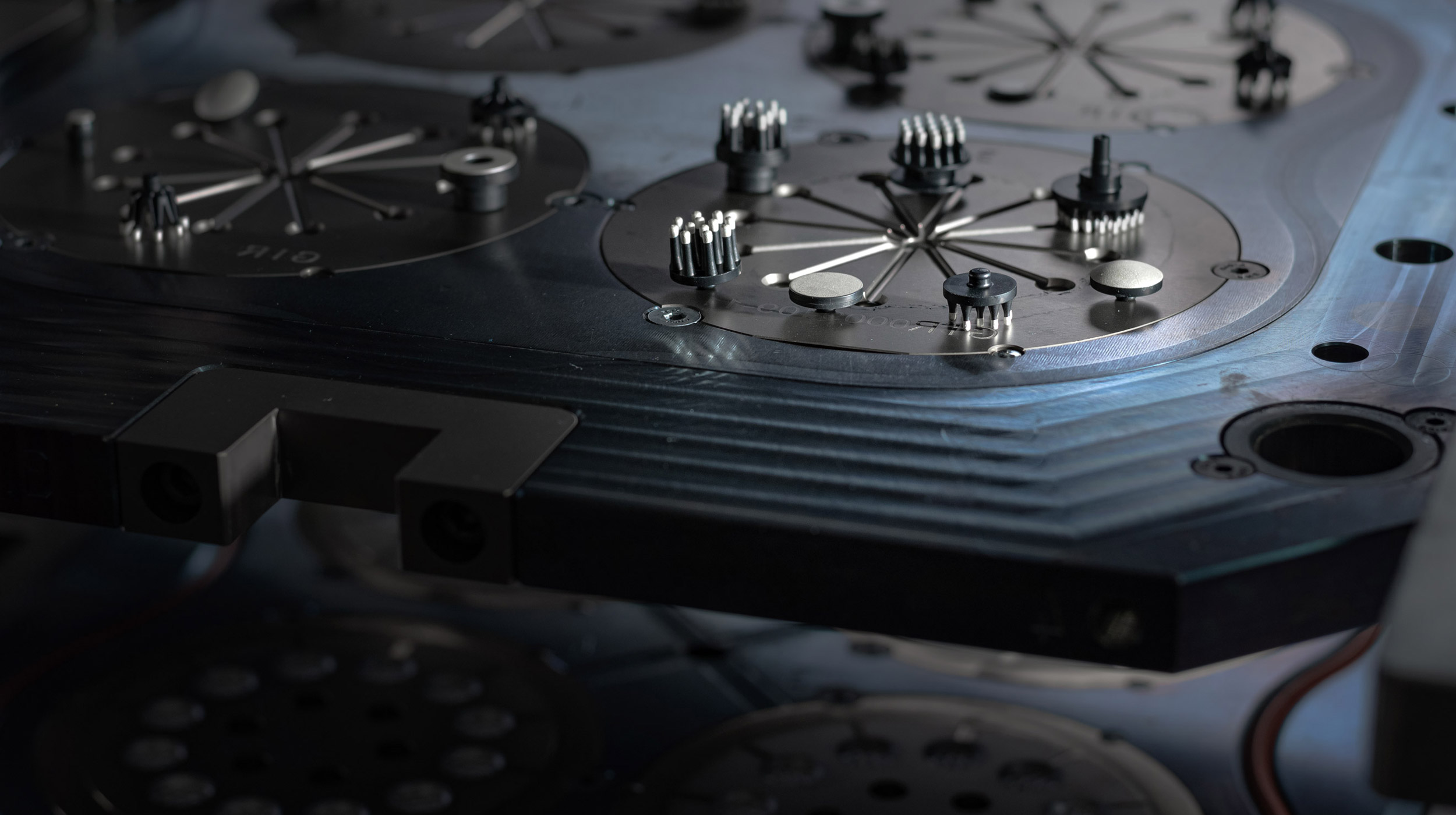
Trockenelektroden-Technologie
Neue Massstäbe für das Biosignal-Monitoring
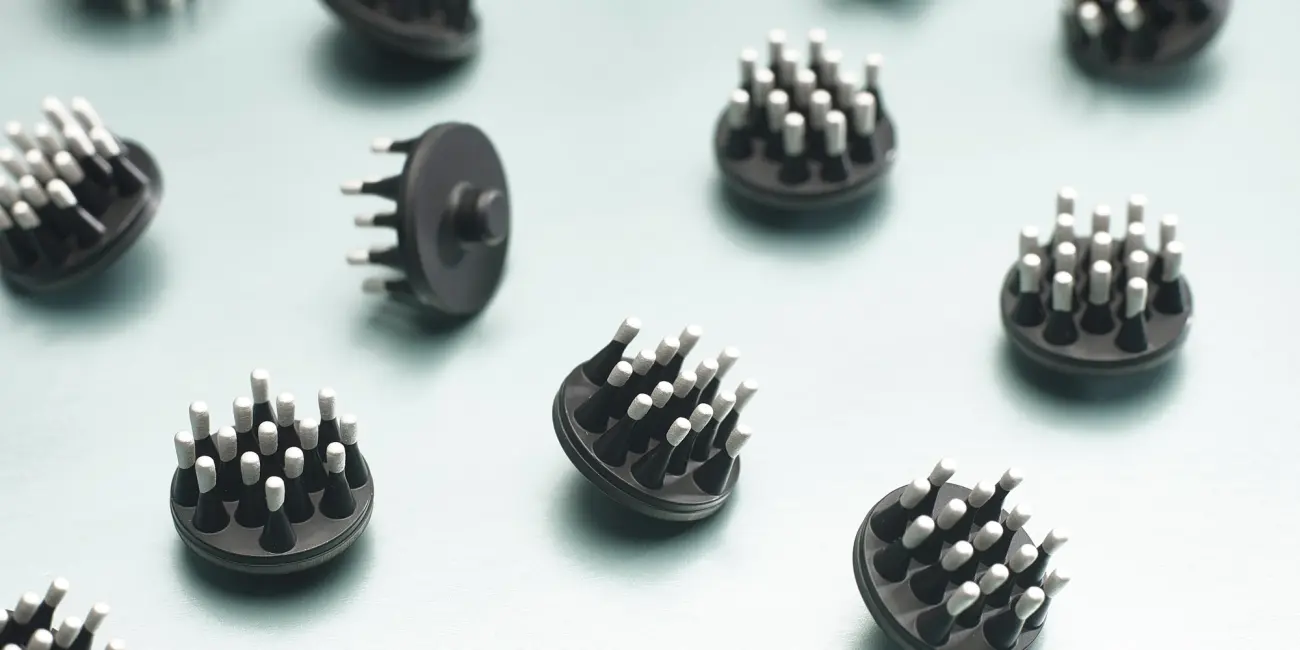
SoftPulse®-Elektroden ermöglichen die Erfassung von Biosignalen ohne Gel und tragen so dazu bei, Hautirritationen zu vermeiden. Die Elektroden basieren auf einem flexiblen, leitfähigen Polymer und sind für einen hohen Tragekomfort während des Monitorings optimiert.
Vorteile der Technologie
- Weiches und robustes Material
Dank einzigartiger Materialeigenschaften sind SoftPulse® sowohl komfortabel als auch robust und eignen sich damit für das langfristige Tragen. - Bereit für den direkten Hautkontakt
SoftPulse® wurden für die trockene, gelfreie Anwendung entwickelt und tragen dazu bei, Hautreizungen und unangenehmen Tragekomfort zu vermeiden. - Verschiedene Standarddesigns
Mehrere SoftPulse® Designs als Bürsten- oder Flachelektroden sind standardmässig verfügbar und ermöglichen eine schnelle Belieferung unserer Kunden.
- Hervorragende Leistung
Eine hohe Signalqualität, eine kurze Einstellzeit und eine hervorragende Stabilität sind einige der wichtigsten Vorteile von SoftPulse®. - Skalierbar auf kommerzielle Stückzahlen
Unsere Produktionsprozesse sind auf eine schnelle Skalierung ausgelegt, sodass auch grosse Stückzahlen innerhalb kurzer Zeit bereitgestellt werden können. - Individuell an Ihre Anforderungen anpassbar
SoftPulse® lassen sich einfach kundenspezifisch anpassen, was die Integration in Geräte wie Headsets, Armbänder, Brillen und Hörgeräte ermöglicht.
Neuigkeiten
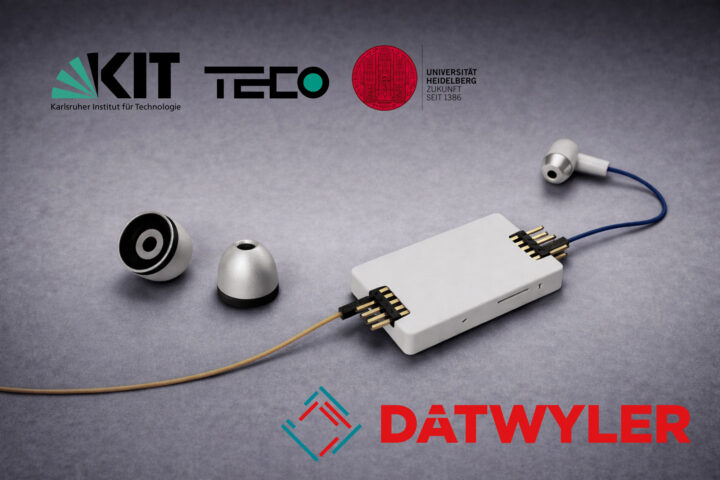
Datwyler’s Venture Unit Wearable Sensors is supporting cutting-edge neurotechnology research by providing high-quality in-ear electrodes to KIT for use with the OpenEarable ExG platform.
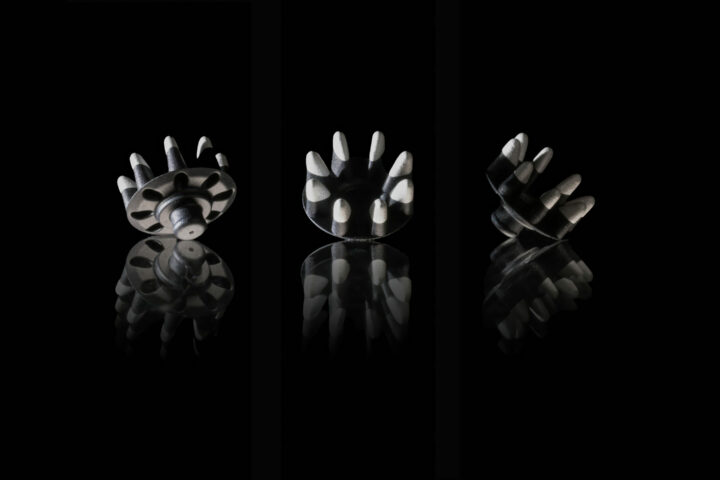
Wearables have become a major driver of innovation in personalized healthcare. In particular, neurotechnology is opening up entirely new possibilities – from brain-computer interfaces to mental health monitoring and neurofeedback. A central element of these systems are electrodes, which form the interface between the human body and electronic components.
Datwyler’s Venture Unit Wearable Sensors is supporting cutting-edge neurotechnology research by providing high-quality in-ear electrodes to KIT for use with the OpenEarable ExG platform.
Wearables have become a major driver of innovation in personalized healthcare. In particular, neurotechnology is opening up entirely new possibilities – from brain-computer interfaces to mental health monitoring and neurofeedback. A central element of these systems are electrodes, which form the interface between the human body and electronic components.
Märkte und Anwendungen
Dank der Kombination aus hoher Leistungsfähigkeit, Komfort, kundenspezifischer Anpassbarkeit und einfacher Integration können SoftPulse® in unterschiedlichsten Wearables und für eine Vielzahl von Anwendungen eingesetzt werden.
-
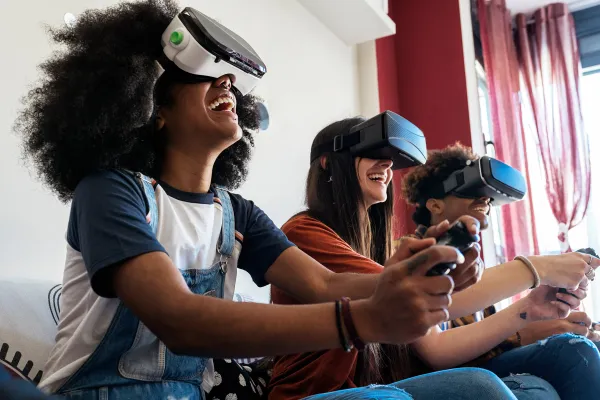
Verbessertes Nutzererlebnis
Passen Sie das Gaming-Erlebnis mithilfe von Biofeedback in Echtzeit an
-
Brain-Computer Interface
Nutzen Sie Gehirnsignale zur Steuerung von Geräten und Anwendungen
-
Freihändige Interaktion
Erfassen Sie biologische Aktivität für eine gestenbasierte Steuerung
-
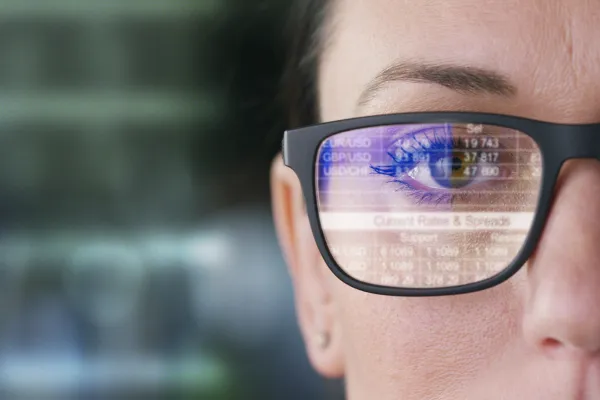
Freihändige Kommunikation
Steigern Sie die Effizienz durch alternative, körperbasierte Steuerungsmöglichkeiten
-
Fernsteuerung
Nutzen Sie Mensch-Maschine-Schnittstellen für den Zugriff auf entfernte Geräte
-
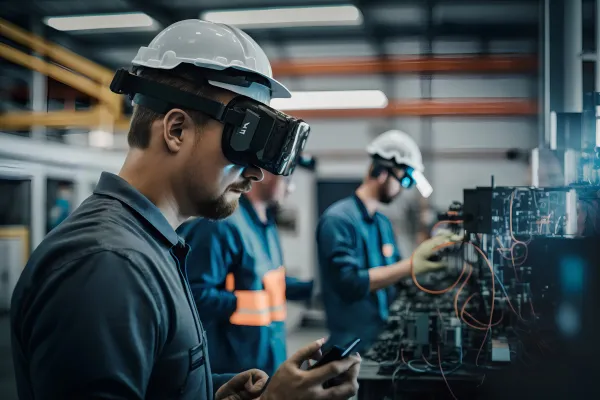
Erkennung von Ermüdung
Objektives Echtzeit-Feedback unterstützt einen sichereren Arbeitsplatz
-
Metaverse
Verbessern Sie das Erlebnis im Metaverse durch Biofeedback in Echtzeit
-
Selbstwahrnehmung
Nutzen Sie Echtzeit-Feedback für ein besseres Verständnis Ihrer Gesundheit
-
Nahtlose Integration
Erweitern Sie Wearable-Geräte um die Erfassung von Biosignalen
-
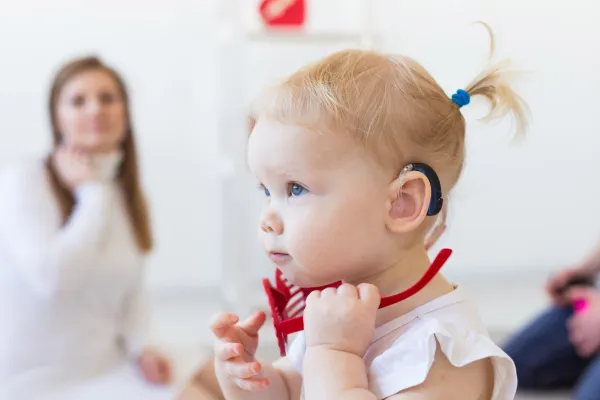
Früherkennung von Erkrankungen
Komfortables und einfaches medizinisches Monitoring zur Früherkennung degenerativer Erkrankungen
-
Remote Patient Monitoring
Bleiben Sie verbunden und ermöglichen Sie eine unkomplizierte Fernüberwachung
-
Kontinuierliche Überwachung von Vitalparametern
Nahtlose und präzise Überwachung für eine proaktive Gesundheitsversorgung
-
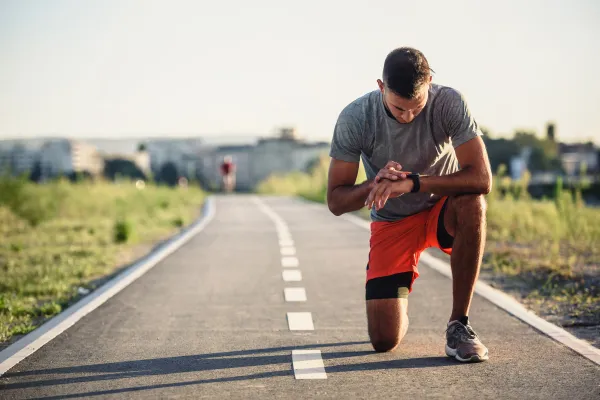
Leistungssteigerung
Erfassen Sie objektive Parameter, um die sportliche Leistung gezielt zu verbessern
-
Erkennung des Stresslevels
Analysieren Sie die Reaktion des Körpers auf das Training, um die Leistung zu optimieren und Belastungen besser zu steuern
-
Erkennung von Gehirnerschütterungen
Erkennen Sie traumatische Ereignisse in Echtzeit, um langfristige Risiken zu reduzieren
Bringen Sie Ihr Wearable mit SoftPulse® auf das nächste Level
Technologieinnovatoren
im Bio-Monitoring
Immer mehr etablierte Unternehmen und innovative Start-ups integrieren die SoftPulse®-Technologie in ihre Produkte.









Globales Netzwerk führender Technologiepartner
Wir arbeiten eng mit führenden Experten, Forschungseinrichtungen sowie sorgfältig ausgewählten Start-ups aus aller Welt zusammen, um unsere wissenschaftliche und wirtschaftliche Kompetenz kontinuierlich weiterzuentwickeln.







Kontakt
Möchten Sie mehr über SoftPulse®, unsere Dienstleistungen und unsere
Unterstützungsmöglichkeiten erfahren? Nehmen Sie Kontakt mit uns auf.

Wissenschaftliche Publikationen
Die folgenden wissenschaftlichen Publikationen bieten zusätzliche Informationen für Leserinnen und Leser, die sich vertieft mit der SoftPulse®-Technologie beschäftigen möchten. Erhalten Sie Einblicke in den wissenschaftlichen Hintergrund sowie verwandte Themen.
Comb-shaped polymer-based dry electrodes for EEG/ECG measurements with high user comfort
Y. H. Chen; M. Op de Beeck; L. Vanderheyden; V. Mihajlovic; B. Grundlehner; C. Van Hoof (2013). Comb-shaped polymer-based dry electrodes for EEG/ECG measurements with high user comfort. In 2013 35th Annual International Conference of the IEEE Engineering in Medicine and Biology Society (EMBC).
Soft conductive polymer dry electrodes for high-quality and comfortable ECG/EEG measurements
Y. H. Chen, M. Op de Beeck, L. Vanderheyden, K. Vanstreels, H. Vandormael, C. Van Hoof (2014). Soft conductive polymer dry electrodes for high-quality and comfortable ECG/EEG measurements. In Advances in Science and Technology 96 (2014), 102-107.
Soft, Comfortable Polymer Dry Electrodes for High Quality ECG and EEG Recording
Y. H. Chen, M. Op de Beeck, L. Vanderheyden, E. Carrette, V. Mihajlović, K. Vanstreels, B. Grundlehner, S. Gadeyne, P. Boon, C. Van Hoof (2014). Soft, Comfortable Polymer Dry Electrodes for High Quality ECG and EEG Recording. In Sensors.
Polymer-based Dry Electrodes for Biopotential Measurements
Chen, Yun-Hsuan (2016). Polymer-based Dry Electrodes for Biopotential Measurements.
A digital health age – how to take on the challenges of this advancing field
N. Haberland (2017). A digital health age – how to take on the challenges of this advancing field. In EPM Magazine.
Wearable eye-tracking
IMEC (2018). Wearable eye-tracking. In IMEC website.
Neue Lösung für trockene EEG-Elektroden
S. Ramser (2018). Neue Lösung für trockene EEG-Elektroden. In Medizin & Technik.
Merging EEG and VR in one headset
IMEC (2018). Merging EEG and VR in one headset. In IMEC website.
Datwyler’s interests in the field of wearable technology in the healthcare sector
N. Haberland (2018). Datwyler’s interests in the field of wearable technology in the healthcare sector. In OnDrugDelivery.
Comparison of dry electrodes for mobile EEG system
M. Koctúrová, J. Juhár (2019). Comparison of dry electrodes for mobile EEG system.
Assessment of the reliability of a novel device for measuring relative transverse abdominal muscle contraction compared to ultrasound and palpation in an asymptomatic population – An exploratory study
C. Pautard, C. Jouanneau, A.-G. Servel, S. Cosqueric, M. Bessette, Y. Le Faou, P. Hardouin (2020). Assessment of the reliability of a novel device for measuring relative transverse abdominal muscle contraction compared to ultrasound and palpation in an asymptomatic population – An exploratory study. In Kinésithérapie, la Revue.
Amorepacific Uses Imec EEG Headsets For Neuromarketing Research
G. Kwon, N. Shahriari (2021). Amorepacific Uses Imec EEG Headsets For Neuromarketing Research. In Silicon Semiconductors.
Riding the Waves – Five considerations for electrode design to maximize performance, comfort, and durability of wearables
S. Sevens (2021). Riding the Waves – Five considerations for electrode design to maximize performance, comfort, and durability of wearables. In mddionline.
Revolutionary monitoring at home
T. Schmierer (2021). Revolutionary monitoring at home. In NS Medical devices.
Motion Artifact Removal Techniques for Wearable EEG and PPG Sensor Systems
Dongyeol Seok, Sanghyun Lee, Minjae Kim, Jaeouk Cho and Chul Kim (2021). Motion Artifact Removal Techniques for Wearable EEG and PPG Sensor Systems. In Frontiers in Electronics.
Propuesta de optimización de un sistema de Interfaz Cerebro-Computadora, utilizando potenciales evocados
Agustina Helguera Héctor Andrés Costa (2021). Propuesta de optimización de un sistema de Interfaz Cerebro-Computadora, utilizando potenciales evocados.
EEG patterns of COVID-19 in frequency, time and spatial domains
Darya Vorontsova, Ivan Menshikov, Marina Isaeva, Aleksandr Zubov, Alexandra Bernadotte (2022). EEG patterns of COVID-19 in frequency, time and spatial domains.
Optimization of the Brain Command Dictionary in Silent Speech Recognition Task Based on Statistical Proximity Criterion
Alexandra Bernadotte, Alexandr Mazurin (2022). Optimization of the Brain Command Dictionary in Silent Speech Recognition Task Based on Statistical Proximity Criterion.
Eavesdropping on the brain at sea: development of a surface‑mounted system to detect weak electrophysiological signals from wild animals
Jessica M. Kendall‑Bar , Ritika Mukherji, Jordan Nichols, Catherine Lopez, Daniel A. Lozano, Julie K. Pitman, Rachel R. Holser, Roxanne S. Beltran, Matt Schalles, Cara L. Field, Shawn P. Johnson, Alexei L. Vyssotski, Daniel P. Costa and Terrie M. Williams (2022). Eavesdropping on the brain at sea: development of a surface‑mounted system to detect weak electrophysiological signals from wild animals. In Animal Biotelemetry.
Feasibility of wireless cardiorespiratory monitoring with dry electrodes incorporated in a belt in preterm infants
A. W. J. Scholten, R. W. van Leuteren, C. G. de Waal, F. H. de Jongh, A. H. van Kaam, G. J. Hutten (2022). Feasibility of wireless cardiorespiratory monitoring with dry electrodes incorporated in a belt in preterm infants. In Physiological Measurement.
Sleeping while diving – tools to detect, analyze and visualuze sleep in wild seals
Jessica M. Kendall-Bar (2022). Sleeping while diving – tools to detect, analyze and visualuze sleep in wild seals.
Evaluación y validación de control mioeléctrico en un entorno virtual de robótica asistencial
Cristina Polo Hortigüela Andrés Úbeda Castellanos (2022). Evaluación y validación de control mioeléctrico en un entorno virtual de robótica asistencial.
SoftPulse – Soft dry electrodes for biomonitoring
Mattia A. Lucchini (2022). SoftPulse – Soft dry electrodes for biomonitoring.
Towards multi-channel EEG “in the wild”: Exploring a new wearable 8-channel system based on cooperative sensor technology
João Forjaco Jorge (2022). Towards multi-channel EEG “in the wild”: Exploring a new wearable 8-channel system based on cooperative sensor technology. In BMT 2022 conference.
A Wireless System for EEG Acquisition and Processing in an Earbud Form Factor with 600 Hours Battery Lifetime
M. Guermandi, A. Cossettini, S. Benatti, L. Benini (2022). A Wireless System for EEG Acquisition and Processing in an Earbud Form Factor with 600 Hours Battery Lifetime. In 2022 44th Annual International Conference of the IEEE Engineering in Medicine & Biology Society (EMBC).
Wearable biosensor-based stress detection to understand and improve the quality of interactions between humans and construction and built environments
Lee, G. (2022). Wearable biosensor-based stress detection to understand and improve the quality of interactions between humans and construction and built environments. In Doctoral Dissertation.
Detection of mental stress from EEG data using artificial intelligence
Marthinsen, A. J. (2022). Detection of mental stress from EEG data using artificial intelligence. In Thesis.
Real-Time Navigation in Google Street View® Using a Motor Imagery-Based BCI
Yang, L., & Van Hulle, M. M. (2022). Real-Time Navigation in Google Street View® Using a Motor Imagery-Based BCI. In Sensors.
Enhancing motor imagery detection efficacy using multisensory virtual reality priming
Reza Amini Gougeh, Tiago H. Falk (2023). Enhancing motor imagery detection efficacy using multisensory virtual reality priming. In Frontiers in Neuroergonomics.
Compact Long-term 8-channel Electroencephalography with High Functional Sensitivity using Cooperative-sensor Technology with Dry Electrodes
G. Yilmaz, M. Rapin, C. Sainz Martínez, R. Soltani, M. Crettaz, R. Delgado-Gonzalo, M. Lemay, O. Chételat, K. A. Schindler, J. Jorge (2023). Compact Long-term 8-channel Electroencephalography with High Functional Sensitivity using Cooperative-sensor Technology with Dry Electrodes. In CSEM Scientific and Technical report 2023.
Investigation of mental stress detection with an 8-channel EEG system using KNN, SVM and EEGNet
Galtung, I. T., & Marthinsen, A. J. Y. (2023). Investigation of mental stress detection with an 8-channel EEG system using KNN, SVM and EEGNet. In Master’s Thesis.
Automatic detection of mental stress responses from electroencephalogram signals
Sletten, C. M. (2023). Automatic detection of mental stress responses from electroencephalogram signals. In Master’s Thesis.
Design and evaluation of an automated stress detection system using Electroencephalography (EEG) signals
Andreassen, I. M. (2023). Design and evaluation of an automated stress detection system using Electroencephalography (EEG) signals. In Master’s Thesis.
Enhancing Performance, Calibration Time and Efficiency in Brain-Machine Interfaces through Transfer Learning and Wearable EEG Technology
Xiaying Wang, Lan Mei, Victor Kartsch, Andrea Cossettini, Luca Benini (2023). Enhancing Performance, Calibration Time and Efficiency in Brain-Machine Interfaces through Transfer Learning and Wearable EEG Technology. In IEEE BioCAS 2023.
Optimization of the Brain Command Dictionary in Silent Speech Recognition Task Based on Statistical Proximity Criterion
Alexandra Bernadotte, Alexandr Mazurin (2023). Optimization of the Brain Command Dictionary in Silent Speech Recognition Task Based on Statistical Proximity Criterion. In COMPUTER RESEARCH AND MODELING.
Cardiorespiratory monitoring with a wireless and nonadhesive belt measuring diaphragm activity in preterm and term infants: A multicenter non‐inferiority study
Scholten, Zhan, et al. (2023). Cardiorespiratory monitoring with a wireless and nonadhesive belt measuring diaphragm activity in preterm and term infants: A multicenter non‐inferiority study. In Pediatric Pulmonology.
Psychological stress detection with optimally selected EEG channel using Machine Learning techniques.
Marthinsen, A. J., Galtung, I., Cheema, A., Sletten, C., Andreassen, I. M., Sletta, Ø., Solker, A. & Molinas Cabrera, M. M. (2023). Psychological stress detection with optimally selected EEG channel using Machine Learning techniques. In Italian Workshop on Artificial Intelligence for Human-Machine Interaction (AIxHMI 2023).
Frequency, time, and spatial electroencephalogram changes after COVID-19 during a simple speech task
D.V. Vorontsova, M.V. Isaeva, I.A. Menshikov, K.Yu. Orlov, A. Bernadotte (2023). Frequency, time, and spatial electroencephalogram changes after COVID-19 during a simple speech task. In COMPUTER RESEARCH AND MODELING.
Multi-Channel Soft Dry Electrodes for Electrocardiography Acquisition in the Ear Region
P. van der Heijden, C. Gilbert, S. Jafari, M.A. Lucchini (2024). Multi-Channel Soft Dry Electrodes for Electrocardiography Acquisition in the Ear Region. In Sensors.
Smart Glasses as a Sensor Fusion Platform for Acquisition and Processing of ExG and Image Data.
Bernardi, A. H. (2024). Smart Glasses as a Sensor Fusion Platform for Acquisition and Processing of ExG and Image Data.
GAPses: Versatile smart glasses for comfortable and fully-dry acquisition and parallel ultra-low-power processing of EEG and EOG
S. Frey et al. (2024). GAPses: Versatile smart glasses for comfortable and fully-dry acquisition and parallel ultra-low-power processing of EEG and EOG. In pre-print.
Multimodal data for behavioural authentication in IoT environments
A. Krasovecm G. Baldini, V. Pejovic (2024). Multimodal data for behavioural authentication in IoT environments. In Data in Brief.
Comparison of wet and dry EEG electrodes
M. Laurent (2024). Comparison of wet and dry EEG electrodes. In Workshop (Sorbonne Paris).
An Ultra-Low Power Wearable BMI System with continual Learning Capabilities
L. Mai, T.M. Ingolfsson, C. Cioflan, V. Kartsch, A. Cossettini, X. Wang, L. Benini (2024). An Ultra-Low Power Wearable BMI System with continual Learning Capabilities. In IEEE Transactions on Biomedical Circuits and Systems.
Train-On-Request: An On-Device Continual Learning Workflow for Adaptive Real-World Brain Machine Interfaces.
Mei, L., Cioflan, C., Ingolfsson, T. M., Kartsch, V., Cossettini, A., Wang, X., & Benini, L. (2024). Train-On-Request: An On-Device Continual Learning Workflow for Adaptive Real-World Brain Machine Interfaces.. In IEEE Biomedical Circuits and Systems Conference (BioCAS).
OpenEarable ExG: Open-Source Hardware for Ear-Based Biopotential Sensing Applications
P. Lepold, T. Röddiger, T. King, K. Kunze, C. Maurer, M. Beigl (2024). OpenEarable ExG: Open-Source Hardware for Ear-Based Biopotential Sensing Applications. In UbiComp ’24: Companion of the 2024 on ACM International Joint Conference on Pervasive and Ubiquitous Computing.
The Effect of Sensory Reweighting on Postural Control and Cortical Activity in Parkinson’s Disease: A Pilot Study
Sadeghi, M., Bristow, T., Fakorede, S., Liao, K., Palmer, J. A., Lyons, K. E., … & Devos, H (2024). The Effect of Sensory Reweighting on Postural Control and Cortical Activity in Parkinson’s Disease: A Pilot Study. In Archives of Rehabilitation Research and Clinical Translation.
Development of tDCS skin contact materials and their measurement setup
Louhikoski, L. (2024). Development of tDCS skin contact materials and their measurement setup. In Master’s Thesis.
Eyewear-Based ECG Recording: A Novel Head-Electrode Approach for Reliable Cardiac Signal Acquisition
A.C. Palmisciano, M. Rossi, A. Farabbi, N. Antonello, D. Trojianiello, T. Ongarello, P. Cerveri, L. Mainardi (2025). Eyewear-Based ECG Recording: A Novel Head-Electrode Approach for Reliable Cardiac Signal Acquisition. In IEEE Access.
Effect of Sensory Reweighting on Postural Control and Cortical Activity in Parkinson Disease.
Sadeghi, M., Bristow, T., Fakorede, S., Lyons, K., Pahwa, R., Huang, C. K., … & Devos, H. (2025). Effect of Sensory Reweighting on Postural Control and Cortical Activity in Parkinson Disease. In Archives of Physical Medicine and Rehabilitation.
A Wearable Ultra-Low-Power System for EEG-Based Speech-Imagery Interfaces
T Ingolfsson, V. Kartsch, L. Benini, A. Cossettini (2025). A Wearable Ultra-Low-Power System for EEG-Based Speech-Imagery Interfaces. In IEEE Transactions on Biomedical Circuits and Systems.
EMD-Fuzzy: An Empirical Mode Decomposition Based Fuzzy Model for Cross-Stimulus Transfer Learning of SSVEP
B. Cao, X. Jian, D. Leong, C. Tsai, Y. Chang, T. Do, C. Lin (2025). EMD-Fuzzy: An Empirical Mode Decomposition Based Fuzzy Model for Cross-Stimulus Transfer Learning of SSVEP. In ArXiv – preprint.
VergeIO: Depth-Aware Eye Interaction on Glasses
X. Zhang, D. Vu, C. Shen, Y. Wang, Y. Shi, J. Chan (2025). VergeIO: Depth-Aware Eye Interaction on Glasses. In ArXiv – preprint.
Monaural Electroencephalogram towards Brain-controlled Hearing Aids
G. Yilmaz, J. Lahera, R. Rusconi, M. Frosio, N. Bonzon, M. Wälti, M. Segessenmann, M. Lucchini, J. Jorge (2025). Monaural Electroencephalogram towards Brain-controlled Hearing Aids. In CSEM Scientific and Technical report 2024.
ElectraSight: Fully Onboard Eye Tracking for Smart Glasses With Hybrid EOG (hEOG)
Schärer, N., Villani, F., Melatur, A., Peter, S., Polonelli, T., & Magno, M. (2025). ElectraSight: Fully Onboard Eye Tracking for Smart Glasses With Hybrid EOG (hEOG). In IEEE Internet of Things Journal.
BioGAP-Ultra: A Modular Edge-AI Platform for Wearable Multimodal Biosignal Acquisition and Processing
S. Frey, G. Spacone, A. Cossettini, M. Guermandi, L. Benini, V. Kartsch (2025). BioGAP-Ultra: A Modular Edge-AI Platform for Wearable Multimodal Biosignal Acquisition and Processing. In ArXiv – preprint.
A Parallel Ultra-Low Power Silent Speech Interface based on a Wearable, Fully-dry EMG Neckband
F. Meier, G. Spacone, S. Frey, L. Benini, A. Cossettini (2025). A Parallel Ultra-Low Power Silent Speech Interface based on a Wearable, Fully-dry EMG Neckband. In ArXiv – preprint.
Feasibility of In-Ear Single-Channel ExG for Wearable Sleep Monitoring in Real-World Settings
Lepold, P., Leichtle, J., Röddiger, T., & Beigl, M. (2025). Feasibility of In-Ear Single-Channel ExG for Wearable Sleep Monitoring in Real-World Settings. In ArXiv – preprint.
Wearable and Ultra-Low-Power Fusion of EMG and A-Mode US for Hand-Wrist Kinematic Tracking
G. Spacone, S. Frey, M. Orlandi, P.M. Rapa, V. Kartsch, S. Benatti, L. Benini, A. Cossettini (2025). Wearable and Ultra-Low-Power Fusion of EMG and A-Mode US for Hand-Wrist Kinematic Tracking. In ArXiv – preprint.
Towards Mitigating Trichotomy in Surface Electromyography (sEMG) in Dogs: A Comparative Analysis of Pre-gelled and Dry Electrodes
Caldeira, J., Caldeira, L., Brás, I., Ribeiro, A. M., da Silva, H. P., & Requicha, J. (2025). Towards Mitigating Trichotomy in Surface Electromyography (sEMG) in Dogs: A Comparative Analysis of Pre-gelled and Dry Electrodes. In 8th ENBENG IEEE Portuguese Meeting on Bioengineering.
Neural evidence for attentional resource allocation to postural control using body brain imaging.
Fakorede, S., Alkhameys, F., Liao, K., Martin, L., & Devos, H. (2025). Neural evidence for attentional resource allocation to postural control using body brain imaging. In Behavioural Brain Research.
Are Reusable Dry Electrodes an Alternative to Gelled Electrodes for Canine Surface Electromyography?
Ribeiro, A. M., Brás, I., Caldeira, L., Caldeira, J., Peham, C., Plácido da Silva, H., & Requicha, J. F. (2025). Are Reusable Dry Electrodes an Alternative to Gelled Electrodes for Canine Surface Electromyography?. In Animals.
Multisensor Smart Eyewear for Biomarkers Acquisition
I. Cupri, A. Scandinelli, A. Giudici, G. Gervasoni, D. Trojaniello, F. Villa (2025). Multisensor Smart Eyewear for Biomarkers Acquisition. In IEEE Sensors Journal.
Evaluating Electric Charge Variation Sensors for Camera-free Eye Tracking on Smart Glasses
Magdaleno, A., Bonazzi, P., Polonelli, T., & Magno, M. (2025). Evaluating Electric Charge Variation Sensors for Camera-free Eye Tracking on Smart Glasses. In ArXiv – preprint.
A patient-specific, 3D printed neurostimulator enabling focal transcranial electrical stimulation and EEG at home
M. Joodaki, et al. (2025). A patient-specific, 3D printed neurostimulator enabling focal transcranial electrical stimulation and EEG at home. In Journal of NeuroEngineering and Rehabilitation volume.
EEG glasses for real-time brain electrical activity monitoring
R. Zanetti, A. Aminifar, D. Atienza (2025). EEG glasses for real-time brain electrical activity monitoring. In Scientific Reports.
A comparative assessment of the simple and modified Randles cells using machine learning for optimal impedance fitting on artificial skin
Murphy, B. B., & Torita, T. (2026). A comparative assessment of the simple and modified Randles cells using machine learning for optimal impedance fitting on artificial skin. In Journal of Analytical Science and Technology.